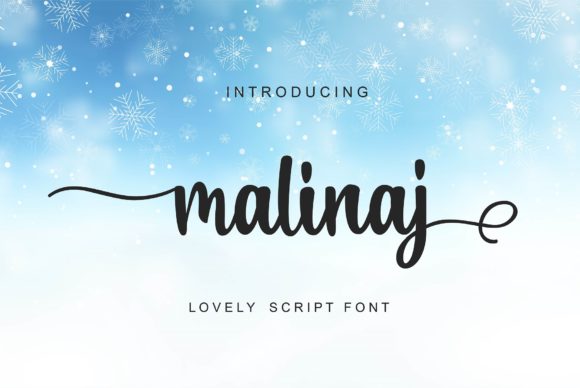
Malinaj: A Handwritten Font for Creative Projects
It started with a blank brand board and a client who wanted something warm, personal, and inviting. They were launching a small café with a focus on local ingredients and community. I knew the font would play a big role in setting the tone. That’s when I came across Malinaj—a paint-brushed handwritten font that felt just right.
Malinaj has this soft, expressive character that feels like it was written with a brush dipped in watercolor. The strokes are fluid, the curves are elegant, and there's a sense of movement that makes it feel alive. It doesn’t look stiff or artificial, which is exactly what I needed for a brand that wanted to feel authentic and approachable.
Testing Malinaj in Real Design Work
I started by testing it on a logo draft. The first thing I noticed was how well it worked as a headline font. It had enough personality to stand out without being overwhelming. I paired it with a simple sans serif for the tagline, and the contrast helped create a balanced visual hierarchy.
Next, I tried it on some packaging mockups. The café’s coffee bags needed a label that felt handmade and unique. Malinaj added that extra touch of craftsmanship. It looked great on both dark and light backgrounds, and the subtle variations in the letters gave it a natural, handcrafted feel.
When I moved to social media graphics, Malinaj really shone. It worked well on Instagram posts and Facebook banners, adding a personal flair to promotional content. The font didn’t lose its clarity at smaller sizes, which was important for captions and callouts.
Malinaj in Brand Identity and Beyond
As the project progressed, I used Malinaj for everything from business cards to menu designs. It was especially effective for headings and short phrases, where its expressive nature could really come through. I found that it worked best as a display or accent font rather than for long paragraphs of text.
One of the things I appreciated about Malinaj was how versatile it was. It could be used in a variety of design contexts without feeling out of place. Whether it was a shop sign, a flyer, or a website header, it brought a sense of warmth and creativity to each element.
Readability wasn’t an issue, even though it’s a script font. The letterforms were well-proportioned, and the spacing allowed the font to breathe. This made it suitable for use in logos and headlines where clarity was essential.
Pairing Malinaj with Other Fonts
When pairing Malinaj with other fonts, I leaned into contrast. A clean, modern sans serif provided a nice counterbalance to the handwritten style. It helped keep the design from feeling too busy while still maintaining a cohesive look.
I also experimented with pairing it with a classic serif font for editorial projects. The combination gave a timeless yet fresh feel, perfect for menus or printed materials that needed a bit of sophistication.
For digital templates, I used Malinaj sparingly. It was great for headers and subheadings but not ideal for body text. That said, it worked well in web design when used as a highlight or decorative element.
Practical Tips for Using Malinaj
If you’re considering using Malinaj in your next project, I recommend testing it in different sizes and contexts before committing to it fully. Print it out, view it on screens, and see how it looks in various applications. This will help you understand its strengths and limitations.
Check the font’s available styles and alternates. Some script fonts have multiple versions of certain letters, which can add more character and flexibility to your design. Malinaj includes a range of options that make it easy to customize without overcomplicating things.
Also, consider the file formats and licensing. Malinaj is likely available in common formats like OTF and TTF, and it should be suitable for commercial use if the license allows. Make sure to review the terms before using it in any client work.
Malinaj for Client Work and Branding
In my experience, Malinaj is a great choice for clients who want their brand to feel personal and authentic. It’s particularly useful for businesses in the food, lifestyle, and creative industries where a human touch is important.
Whether it’s for a café, a boutique, or a skincare brand, Malinaj adds a sense of care and attention to detail. It’s a font that can elevate a design without overpowering it, making it a valuable addition to any designer’s toolkit.
For merchandise and printed assets, Malinaj works well on items like stickers, labels, and packaging. Its expressive nature makes it stand out, and it can help create a memorable brand presence.
Overall, Malinaj is a font that brings a unique energy to any project. It’s not just a typeface—it’s a tool for storytelling, a way to convey emotion, and a way to make a brand feel more human. If you’re looking for a premium font that can add personality to your designs, Malinaj is definitely worth exploring.